

Last Updated on 4 months ago by Editor
Forced organ harvesting from Falun Gong practitioners held in Chinese prisons and detention centers represents one of the most extensively investigated human rights issues of the 21st century. Unlike many allegations in human rights discourse, this one has been examined by independent lawyers, investigative journalists, medical experts, and an international tribunal — all reaching broadly consistent conclusions.
This article documents the evidence base, the investigative reports, China’s official responses and their credibility problems, the international legal and legislative reaction, and what the findings mean for anyone considering medical travel to China for organ transplantation.
1. What is Falun Gong?
Falun Gong (also known as Falun Dafa) is a spiritual practice that emerged in China in 1992, combining five gentle meditation exercises with a moral philosophy grounded in three principles: Truthfulness (Zhen 真), Compassion (Shan 善), and Forbearance (Ren 忍). By the late 1990s, an estimated 70 to 100 million people in China practiced it — a number that reportedly exceeded the membership of the Chinese Communist Party (CCP).
The practice involves no membership fees, no formal organizational hierarchy, and no financial requirements. Practitioners meet in public parks and spaces to exercise together. It is practiced freely in over 100 countries worldwide.
For a comprehensive overview of what Falun Gong is and how it is practiced, see: What is Falun Gong? 10 things you need to know about Falun Dafa
2. The Persecution Behind the Harvesting
Understanding organ harvesting requires understanding the context in which it occurs: a state-organized persecution that began in July 1999.
The CCP’s then-leader Jiang Zemin ordered the nationwide ban on Falun Gong on July 20, 1999, establishing the “610 Office” — an extralegal security agency created solely to eradicate the practice. The methods documented by Human Rights Watch and Freedom House include:
- Mass arbitrary detention in prisons, labor camps, and “transformation” centers
- Torture used as a standard tool of forced renunciation
- Psychiatric imprisonment of practitioners who refused to recant
- Denial of legal representation and family notification
A critical structural feature distinguishes the persecution of Falun Gong from ordinary imprisonment: practitioners who refused to identify themselves could not be matched to family members who might advocate for their release. This created a population of prisoners who, for practical purposes, had no external protection and whose disappearance would go unrecorded.
For a detailed analysis of why the CCP banned Falun Gong and the political motivations behind the crackdown, see: Why is Falun Gong Banned in China?
3. How Forced Organ Harvesting Works
For a broader definition of forced organ harvesting beyond China, see: What is Forced Organ Harvesting?
Based on accumulated investigative findings, the alleged process follows a systematic pattern:
Step 1 — Arrest and Detention Practitioners are detained in prisons, labor camps, and reeducation centers. Many refuse to provide their names to protect family members from retaliation, making them effectively “paperless” prisoners.
Step 2 — Systematic Medical Screening Detained practitioners are subjected to comprehensive medical examinations — blood type testing, tissue typing, organ function assessments, and cardiac screening. Former detainees consistently report that these tests were unlike anything conducted on other prisoners and were not explained as related to their health care. These are precisely the tests required for organ compatibility matching.
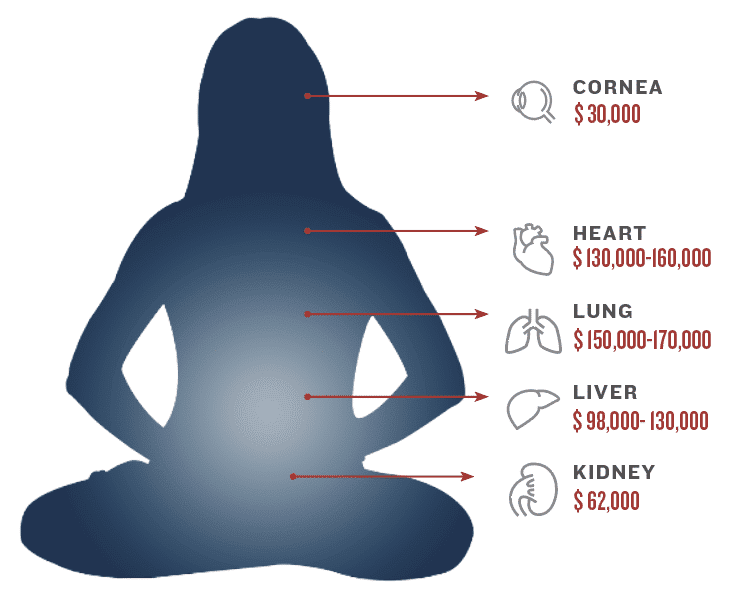
Step 3 — On-Demand Organ Harvesting When a compatible recipient is identified, the practitioner is allegedly killed during organ removal. The organs — kidneys, livers, hearts, corneas, and lungs — are then transplanted into paying recipients, who may include Chinese nationals or international “transplant tourists.”
Step 4 — Concealment Death certificates typically list causes unrelated to surgery. Bodies are reportedly cremated rapidly, eliminating forensic evidence.
The systemic nature of this process — not isolated incidents but an organized supply chain — is what distinguishes these findings from individual abuse cases and what makes investigators describe it as a crime against humanity.
Documentary Exposing China’s Forced Organ Harvesting Screening in New York:
4. The Kilgour-Matas-Gutmann Investigations
The most sustained independent investigation into China’s organ harvesting was conducted by three researchers over more than a decade.
The Bloody Harvest Report (2006, 2007, 2016)
David Kilgour, a former Canadian Secretary of State for Asia-Pacific, and David Matas, a prominent international human rights lawyer, published their first investigation in 2006 — “Bloody Harvest” — updated in 2007 and again in a comprehensive 2016 edition co-authored with journalist Ethan Gutmann: Bloody Harvest / The Slaughter: An Update.
The methodology included:
- Recorded telephone calls to 15 Chinese hospitals and detention facilities, in which staff admitted to using or being able to supply organs from Falun Gong practitioners
- Statistical analysis of China’s transplant capacity vs. its claimed voluntary donor numbers, revealing an unexplained surplus of organs
- Testimony from former detainees who reported undergoing organ compatibility testing while imprisoned
- Interviews with medical professionals inside and outside China
Key findings from the 2016 update:
- The researchers estimated that 1.5 million Falun Gong practitioners may have been killed for their organs between 2000 and 2015
- Hospital transplant capacity significantly exceeded what China’s official voluntary donor figures could account for
- The infrastructure — specialized wards, short wait times advertised to international patients, military hospital involvement — pointed to state-level organization rather than isolated corruption
The full reports are available at organharvestinvestigation.net and through the Falun Dafa Information Center.
Ethan Gutmann — The Slaughter (2014)
Investigative journalist Ethan Gutmann’s book The Slaughter drew on interviews with former detainees, doctors, and refugees. His conservative estimate: 65,000 Falun Gong practitioners were killed for their organs between 2000 and 2008. His methodology focused particularly on cross-referencing survivor accounts with hospital capacity data and transplant tourism advertisement patterns.
5. The China Tribunal (2019)
The most authoritative independent legal assessment of these allegations was delivered by the China Tribunal on June 17, 2019.
What the China Tribunal Was
The China Tribunal was an independent international peoples’ tribunal established specifically to investigate forced organ harvesting from prisoners of conscience in China. It was chaired by Sir Geoffrey Nice QC — the prosecutor who led the case against Slobodan Milošević at the International Criminal Tribunal for the former Yugoslavia — and comprised seven independent members with expertise in international human rights law, transplant surgery, international relations, and Chinese history.
Over twelve months, the tribunal:
- Questioned more than 50 fact witnesses, experts, investigators, and analysts across five days of public hearings
- Reviewed written submissions, investigative reports, academic papers, and medical literature
- Received expert legal advice on applicable international law
- Considered exculpatory evidence submitted to challenge the allegations
Key Findings
The China Tribunal’s Final Judgement concluded:
“Forced organ harvesting has been committed for years throughout China on a significant scale and that Falun Gong practitioners have been one — and probably the main — source of organ supply. The Tribunal has had no evidence that the significant infrastructure associated with China’s transplantation industry has been dismantled and, absent a satisfactory explanation as to the source of readily available organs, concludes that forced organ harvesting continues till today.”
The tribunal further found that these acts met the legal definition of crimes against humanity under Article 7 of the Rome Statute — specifically: illegal detention, torture, forced organ harvest, and killing of prisoners of conscience.
The tribunal’s conclusion was reported by The Guardian, NBC News, Forbes, and The Telegraph on June 17–18, 2019.
6. Statistical Evidence: China’s Transplant Numbers
One of the most compelling lines of evidence does not rely on witness testimony at all — it emerges from China’s own official data.
China’s organ transplant numbers grew at a rate that independent researchers have found statistically implausible under a voluntary donation model.
A 2019 peer-reviewed study published in BMC Medical Ethics — “Analysis of official deceased organ donation data casts doubt on the credibility of China’s organ transplant reform” — applied forensic statistical methods to China’s official transplant registry data from 2010 to 2018. The study found that the reported data exhibited patterns consistent with manipulation rather than organic growth, and that “the official data is not credible” as a reflection of genuine voluntary donation.
Key statistical anomalies:
- Voluntary deceased donors grew from 34 in 2010 to 6,316 in 2018 — an increase of 185 times in eight years
- Transplant numbers grew at rates that independent hospital capacity analysis suggests significantly understate actual volumes
- Short wait times advertised to international patients — days to weeks, compared to years in Western countries — are structurally impossible under a genuine voluntary donation queue system
By comparison, countries with established voluntary donation systems (Spain, the United States) show gradual, demographically predictable growth curves. China’s reported numbers do not.
7. Witness Testimonies and Undercover Calls
Undercover Investigations
Investigators from multiple organizations have conducted recorded calls to Chinese hospitals posing as patients seeking transplants. Across different years and different callers, a consistent pattern emerged: hospital staff confirmed short wait times, willingness to provide organs on demand, and in some cases acknowledged — when asked directly — that the organs came from Falun Gong practitioners.
The World Organization to Investigate the Persecution of Falun Gong (WOIPFG) conducted hundreds of such calls in 2020 and 2021, documenting ongoing willingness of hospitals to accommodate on-demand organ requests.
The Kilgour-Matas 2006 report included transcripts of calls to 15 hospitals in which personnel confirmed using or being able to supply Falun Gong organs. Some stated that Falun Gong practitioners’ organs were “healthier” than those from death row inmates.
Survivor Testimony
Former detainees consistently describe the same pattern: blood tests, urinalysis, and physical examinations conducted without medical justification or explanation, performed on Falun Gong practitioners but not on other prison populations.
In a 2023 press conference in Washington, D.C., the first publicly identified survivor of forced organ harvesting testified before members of Congress. The individual — who had portions of his lung and liver removed — had escaped Chinese detention and came forward specifically to support the Falun Gong Protection Act legislation.
Former Medical Professionals
A number of Chinese surgeons who later left China have described participating in organ harvesting from prisoners. The China Tribunal questioned several such witnesses as part of its proceedings.
8. China’s Official Responses — and Why Critics Are Unconvinced
The 2015 Reform Announcement
In December 2014, the China Human Organ Donation and Transplantation Committee announced that, effective January 1, 2015, organs from executed prisoners would no longer be used and that voluntary citizen donation would become the sole legal source of organs.
International medical organizations initially welcomed this announcement. However, independent researchers identified serious credibility problems:
The numbers don’t add up. As the BMC Medical Ethics study and other analyses demonstrate, China’s reported transplant volumes following 2015 cannot be explained by voluntary donation alone, given China’s low voluntary donation rates prior to reform and the absence of a commensurate public awareness campaign.
Infrastructure remains. The China Tribunal found no evidence that the specialized transplant infrastructure — hospital wards built to accommodate rapid-turnover transplant patients, military hospital involvement, short wait time advertising — had been dismantled. A genuine transition away from prisoner organs would require dismantling this infrastructure.
Transparency is absent. Independent inspectors have not been permitted to verify the claimed reform. China has rejected requests for independent audit of its transplant system.
The advertising continues. As of the China Tribunal’s 2019 judgment, Chinese hospitals were still advertising short wait times internationally — times incompatible with a voluntary donation system.
China’s Ministry of Foreign Affairs has consistently denied the allegations and dismissed the China Tribunal’s findings as politically motivated. The tribunal’s response, in its published judgment, was that China’s denials were unaccompanied by evidence and that the circumstantial and direct evidence pointing to continued harvesting was “overwhelming.”
9. International Reaction: Governments, Courts, and Legislatures
The findings of independent investigators have been taken seriously by legislative and governmental bodies internationally.
United States Congress Multiple committees have held hearings on forced organ harvesting in China. The House passed the Stop Forced Organ Harvesting Act (H.R. 1503) in 2023, and the Falun Gong Protection Act passed the House by unanimous voice vote in both June 2024 and May 2025.
European Parliament On January 18, 2024, the European Parliament passed Resolution 2024/2504(RSP) specifically condemning the persecution of Falun Gong practitioners and calling on the EU and member states to support an international investigation and impose sanctions on perpetrators. The resolution was adopted by a cross-party majority.
United Nations Special Rapporteurs UN Special Rapporteurs on Torture and on Freedom of Religion or Belief have repeatedly raised concerns about the treatment of Falun Gong practitioners in China, including the pattern of medical testing in detention facilities.
Israel, Spain, Taiwan, and Other Jurisdictions Israel and Spain have passed legislation restricting organ transplant tourism to China. Taiwan has banned travel to China for organ transplant purposes. These legislative responses reflect official governmental assessments that the risk of complicity in forced harvesting is real.
Human Rights Watch and Freedom House Both organizations have documented the broader persecution of Falun Gong since 1999 and have specifically cited organ harvesting allegations as warranting international investigation. Freedom House’s comprehensive 2017 report Battle for China’s Spirit addressed the issue in detail.
10. The Falun Gong Protection Act (U.S. Congress)
The Falun Gong Protection Act is U.S. legislation that specifically targets forced organ harvesting of Falun Gong practitioners in China through economic and travel sanctions.
Legislative history:
- June 2023: H.R. 4132 introduced in the 118th Congress
- June 25, 2024: H.R. 4132 passed the House unanimously
- July 2024: Referred to the Senate Foreign Relations Committee; did not advance before the 118th Congress ended
- March 3, 2025: Reintroduced in the 119th Congress as S. 817 by Senators Ted Cruz, Mike Johnson, Rick Scott, and Thom Tillis
- May 5, 2025: H.R. 1540 (companion House bill) passed the House by unanimous voice vote for the second consecutive Congress
The Act requires the President to impose visa bans and property-blocking sanctions on foreign persons determined to have engaged in or facilitated forced organ harvesting of Falun Gong practitioners. It also mandates a report on U.S. grants that supported transplant research in China.
The bill’s unanimous House passage — twice, across two separate Congresses — reflects bipartisan consensus that the evidence of forced harvesting is credible and that legislative action is warranted. The current obstacle is Senate passage. For the latest legislative status, see congress.gov.
11. What Travelers and Medical Professionals Should Know
For patients considering transplant tourism to China: Multiple governments, the Declaration of Istanbul, the World Medical Association, and the Transplantation Society have all issued guidance warning against transplant tourism to China. The core concern is that the short wait times Chinese hospitals advertise — days to weeks — are only possible if organs are sourced from people killed on demand. Voluntary donation systems cannot produce organs on a predictable schedule.
Any patient who receives a transplant in China under these conditions risks being an indirect beneficiary of a killing. Several jurisdictions have now criminalized organ transplant tourism to China.
For medical professionals: The Declaration of Istanbul on Organ Trafficking and Transplant Tourism prohibits facilitating or participating in transplant tourism. Publishing research in partnership with Chinese transplant programs that cannot demonstrate ethical organ sourcing has become an increasingly contested ethical question, raised formally by The Lancet and other journals.
For policy researchers: The ETAC (End Transplant Abuse in China) coalition at endtransplantabuse.org maintains a current database of legislative and judicial developments internationally.
FAQ
What is forced organ harvesting?
Forced organ harvesting refers to the removal of organs from a living person without their consent, typically resulting in the person’s death. In the context of China, the term refers specifically to the alleged practice of killing detained prisoners of conscience — primarily Falun Gong practitioners — to supply organs for China’s transplant industry.
Has forced organ harvesting from Falun Gong practitioners been proven?
The China Tribunal, an independent international panel chaired by Sir Geoffrey Nice QC, concluded in June 2019 that forced organ harvesting had been committed on a significant scale in China and that Falun Gong practitioners were the primary source of organs — findings reached “beyond reasonable doubt.” This represents the most authoritative independent legal assessment to date.
Why are Falun Gong practitioners targeted specifically?
Several factors are cited by investigators: practitioners are present in large numbers in detention facilities; many refuse to identify themselves, making them paperless prisoners with no external advocates; and — as hospital staff stated in undercover calls — their generally healthy lifestyle makes their organs medically superior to those of death row criminals.
Did China stop organ harvesting in 2015?
China announced in 2015 that it would rely solely on voluntary donation. Independent researchers, including the China Tribunal, found no credible evidence that the practice stopped. Statistical analysis of China’s own official data raises serious doubts about the claimed reform.
Is the Falun Gong Protection Act law?
As of June 2026, the Falun Gong Protection Act has passed the U.S. House of Representatives twice (June 2024 and May 2025) but has not yet been signed into law. It is pending in the Senate. For current status, see congress.gov.
What can I do?
You can contact your national representatives to support legislation addressing organ transplant tourism and forced harvesting, refuse medical travel to China for organ transplants, and support organizations such as Doctors Against Forced Organ Harvesting (DAFOH) and ETAC that monitor and campaign against this practice.
Conclusion
The evidence that China has been harvesting organs from Falun Gong practitioners on a large scale is no longer a fringe allegation. It has been examined by independent lawyers, documented by investigative journalists, analyzed by medical statisticians, and formally adjudicated by an international tribunal chaired by one of the world’s leading human rights prosecutors.
The China Tribunal’s conclusion — crimes against humanity, committed for years, on a significant scale, with Falun Gong practitioners as the primary victims — stands as the most authoritative independent finding to date. The subsequent passage of related legislation in the United States, the European Parliament’s 2024 resolution, and Israel and Spain’s domestic laws restricting transplant tourism all reflect governments’ assessment that the evidence is credible enough to warrant action.
What remains is political will: specifically, whether the international community will treat this issue with the same urgency it would apply to documented crimes against humanity elsewhere.
Related Articles
- What is Falun Gong? 10 things you need to know about Falun Dafa
- Why is Falun Gong Banned in China?
- Is Falun Gong a Cult? What Scholars and Experts Actually Say
- The Falun Gong Protection Act: What It Is and Where It Stands
Watch: What is Forced Organ Harvesting in China – Explainer